
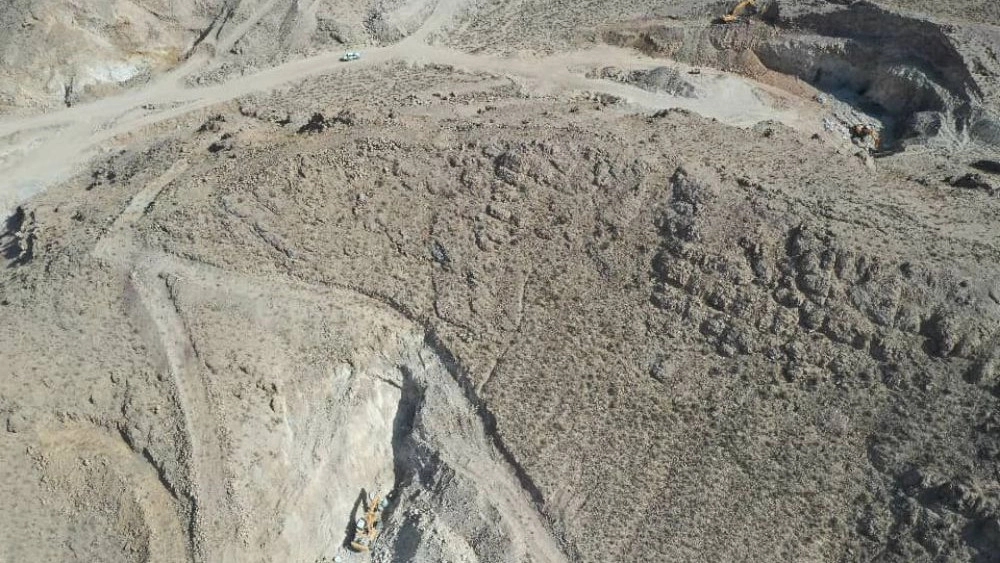
As one of the main pillars of economic and industrial development, the mining industry requires large investments and smart financial management. In the meantime, a major part of the operational budget of mines is allocated to the extraction and tailings sector. For this reason, mastering the principles of "estimating the cost and price of mining contracting" is of vital importance for employers, investors and contracting companies. Accurate estimation and cost engineering not only prevents the stoppage of operations due to lack of liquidity, but also ensures a stable profit margin and a reliable return on investment rate for the project. Cooperation with well-established and well-known companies such as Royan Vashq Sharq Company, which have technical knowledge, specialized machinery and high operational experience, guarantees accurate cost management and increased production efficiency in mining projects.
The importance of accurately estimating the price of mining contracts in the profitability of projects
Incorrect calculation of costs in mining projects can mean the failure of the entire economic plan. When the estimation of the cost and price of the mining contract is not based on accurate field and geotechnical variables, unforeseen financial risks appear during the operation. These financial fluctuations can distort contractual obligations and cause the project to face long-term delays.
A principled and scientific estimate should cover all the visible and hidden factors of extraction, from the topography of the land to the wear and tear of machinery and the costs of environmental restoration. In this regard, full knowledge of the cost structure allows miners to choose the best contract assignment strategy and enter tenders with full transparency.
Key and influencing factors on determining the price of mining contracts
The pricing of mining contracting services is influenced by several variables, neglecting each of them can upset the financial balance of the project. In the following, we mention the most important effective components in this process.
Geological characteristics and hardness of the deposit rock
One of the most basic factors in estimating the cost and price of mining contracts is the type of rock, the degree of hardness, abrasiveness, and the degree of jointing of the rock mass. The harder and more abrasive the rock is, the more the consumption of cement, sanding materials and the erosion of the bucket of mechanical excavators and bulldozer blades will increase. This directly affects the index of the cost of drilling and maintenance of machinery.
Stripping Ratio
The tailings ratio determines how much waste rock must be moved to obtain each ton of valuable mineral. A high ratio means an increase in the volume of excavation, the need for a larger transport fleet, and as a result, a significant increase in the price of the contractor per ton of extracted material.
Geographical location and climatic conditions of the mine
Access to transportation ways, the distance of the mine from the processing plants, the weather climate of the region (extreme heat or cold) and the slope of the access roads are other influencing factors. Roads with non-standard and slippery slopes greatly increase the fuel consumption and tire wear of dump trucks and increase the cost per ton-kilometer of transportation.
Type of operation (open pit mining vs. underground mining)
Typically, the cost of mining in underground mines is much higher than open pit mines due to the need for maintenance, ventilation, water pumping and special equipment. However, in open-pit mines, the width of the extraction steps and the depth of the pit play an essential role in determining the tonnage and the total cost of the operation.
Classification of costs in mining operations
To properly understand how to estimate the cost and price of mining contracts, it is necessary to separate the costs into two main categories: capital (CAPEX) and operational (OPEX) and then into detailed components.
1. Drilling & Blasting costs
Drilling and blasting is the first link in the mining chain in hard rocks. This section includes the following costs:
Depreciation and rental of drill wagon and roller machines.
Purchasing consumables such as drill, rod and shank.
Supply of primary and secondary explosives (Anfu, Emulite, Nanel, detonator and fuse).
Salary of experienced fire team and security and monitoring permits.
Incorrect design of the fire pattern can lead to the creation of very large pieces (boulders) that require secondary crushing and greatly increase the cost of the entire operation.
2. Loading & Hauling costs
Loading and transportation accounts for more than 50% of the total operating costs in open pit mining. This row includes:
Operation of shovels, heavy mechanical excavators and loaders.
The transport fleet includes dump trucks and mining dump trucks.
Consumption of diesel fuel and hydraulic and engine oils.
The very high cost of replacing the tires of heavy machinery.
Compatibility of loading capacity with the capacity of the transport fleet is one of the sensitive issues of engineering, which Royan Vatheq Sharq Company minimizes the waste of loading time and prevents the waste of the project budget by using modern fleet management systems.
3. The costs of repairs, maintenance and depreciation of machinery
Mining machines work in very harsh environmental conditions. In estimating the cost and price of the mining contract, the hourly depreciation rate, the cost of replacing the main spare parts (engine, gearbox, undercarriage) and the creation of well-equipped repair shops at the mining site should be calculated with high accuracy so that the fleet does not stop unexpectedly.
4. Manpower costs and HSE management
Safety in mining is the first priority. Costs related to the wages of skilled operators, mining engineers, surveyors, safety experts, personal protective equipment, civil liability insurance and welfare services and staff camping in remote areas are an integral part of the financial estimate.
5. General, administrative and overhead costs of the contractor
These costs include the contractor's reasonable interest, bank guarantees, taxes, personnel social security insurance, and headquarters and logistics support costs, which are applied as a percentage on the base prices.
The formula and structure of calculating the cost of extracting each ton of minerals
To calculate the contractor's proposed price per ton, a coded algorithm is used:
Calculation of annual or monthly production capacity based on mine exploitation plan.
Estimating the useful working hours of the fleet by considering the Availability Factor and the Utilization Factor.
Calculating the cost of each hour of machinery operation (total cost of depreciation, fuel, filter, tires and operator's salary).
Dividing the hourly cost by production output in tons or cubic meters per hour.
Adding the costs of fire fighting, safety, construction of stepped roads and maintenance of dumps to the unit price.
Adding overhead coefficients, risk and expected profit of the contractor.
Through these steps, the final number obtained as the rate per ton of extraction or per cubic meter of tailings is announced to the employer.
Challenges of economic fluctuations and inflation in mining contracting contracts
One of the biggest challenges in estimating the cost and price of mining contracts in the country is the exchange rate fluctuations and the constant increase in the price of rubber, oil and spare parts of imported machinery. If the structure of the contracting contract does not have the necessary flexibility, the increase in prices will lead the contractor to bankruptcy and the employer to stop production.
For this reason, it is necessary to formulate fair adjustment indices, use attached formulas for diesel and rubber prices, and agree on a certain ceiling of fluctuations in the text of the contracts. Professional groups such as Royan Vazeq Sharq Company always offer a transparent and win-win contract structure to their employers by providing accurate economic analyzes and predicting market risks, so that the project can proceed without interruption even in turbulent economic conditions.
The role of Royan Vatheq Shargh Company in optimizing mining costs
Choosing a committed contractor with high technical ability and equipment is the best solution for managing the budget and advancing the production plan. Royan Vashq Sharq Company having an experienced group of mining engineers, geologists and expert executive teams, has been able to create a new standard in the provision of mining and tailing contracting services.
The benefits of working with Royan Vazeq Sharq include the following:
Engineering and detailed evaluation of the deposit before the start of operations to provide the most transparent estimate of the cost and price of the mining contract.
Using a mechanized and modern fleet of heavy mining machinery that greatly reduces downtime and depreciation costs.
Exact execution of blasting patterns for uniform granulation and preventing the production of suspended load and destructive vibrations.
Intelligent transportation management and shortening transportation routes in order to reduce fuel consumption and tire wear.
Full commitment to production schedules and strict implementation of Health, Safety and Environment (HSE) regulations.
Transparency in situations and reduction of employer's hidden costs through optimization of technical processes.
Employers who seek to maximize the productivity rate and receive the highest quality mining services at the most optimal possible cost, can rely on the experience and expertise of Royan Vasteq Sharq Company to put their projects into operation with ease.
Practical solutions to reduce mining costs without losing safety and quality
Cost reduction should not be associated with quality loss or mine safety reduction. By implementing new techniques, it is possible to manage up to 15-25% of mining costs:
Optimization of the explosion geometry with explosion simulation software to reduce the consumption of special expenses and increase the crushing efficiency.
Implementation of preventive maintenance and repair (PM) programs based on online monitoring of oil and parts condition instead of repair after failure.
Precise design of ramps and access roads with a standard slope (maximum 8 to 10%) to reduce truck fuel consumption.
Continuous training of heavy machinery operators for optimal driving and reducing brake and tire wear.
Using monitoring and dispatching systems to eliminate unproductive standby times and optimal allocation of the fleet to different work fronts.
How to inquire about the price and assign the projects to the mining contractor
In order to receive an accurate price estimate from contractors, the employer must provide complete basic information. This information includes up-to-date topographic maps, geotechnical and geological reports, results of coring and rock hardness measurement, coordinates of waste and mineral depots, and access to water and fuel sources. The more transparent the information provided, the more accurate and fair the cost estimate and price of the mining contract will be.
Evaluating the executive resume, dedicated fleet status, engineering team structure and contractor's contractual obligations is critical at this stage; An issue that has distinguished Royan Vatheq Sharq Company as a reliable and leading option in the country's mining contracting market.
summary
Hardness and wear of deposit rock, tailing ratio, transportation distance to factory or depot, and fuel cost and depreciation of heavy machinery are the main determining factors.
Due to having a modern and dedicated fleet, careful management of the loading and unloading chain, use of optimal firing patterns and elimination of time wastage in the production process.
Price adjustments are usually determined based on agreed formulas attached to official inflation, official diesel price fluctuations, mineral tire rates, and approved wage changes.